
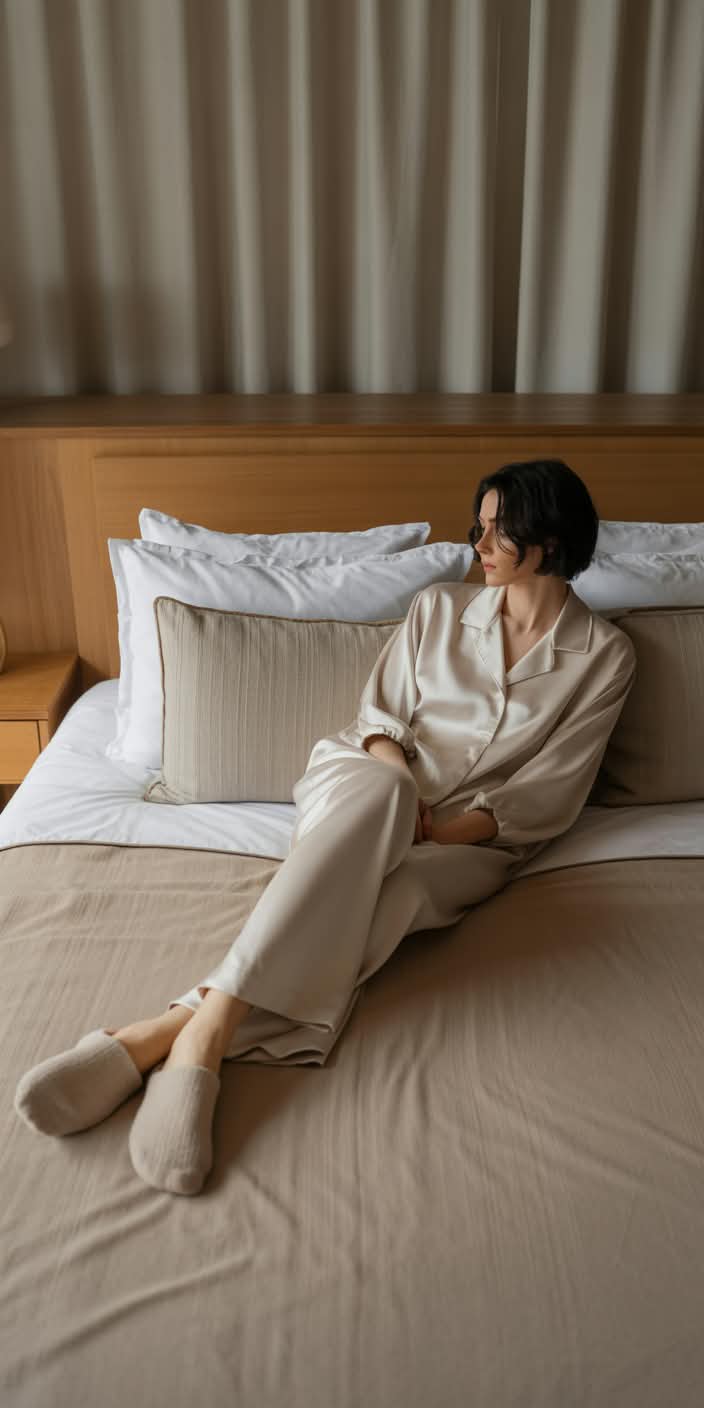
Imagine opening your eyes in the morning and the first thing you don’t see… is clutter.
No piles of clothes in the corner.
No overstuffed dresser.
No visual noise shouting at your brain before you’ve even had coffee.
Just soft light, clean lines, calm colors, and a bed that looks like an invitation instead of a battlefield.
That quiet exhale you just felt reading that?
That’s exactly why so many people are falling in love with minimalist bedrooms—and why once they experience it, they never want to go back.
A minimalist bedroom isn’t about owning nothing. It’s about owning your energy.
It’s not about being boring. It’s about creating a space that quietly says:
“You’re safe. You can rest here.”
In this guide, we’re going to walk through how to design a minimalist bedroom that doesn’t just look incredible in photos—but actually changes the way you feel, sleep, and move through your days.
Minimalism, at its core, is simple:
Less stuff. More intention.
In a bedroom, that translates into three powerful pillars:
- Simplicity – fewer distractions, fewer decisions, more ease
- Functionality – everything in the room has a purpose
- Clutter-free calm – clear surfaces, clear corners, clear mind
Here’s why that matters:
- Visual clutter = mental clutter. Your brain processes every object it sees.
- A busy room can keep your nervous system in “alert” mode, even when you’re trying to wind down.
- A minimalist bedroom removes the noise so your body gets the message: it’s okay to relax now.
This is buying psychology at its most personal:
You’re not just “decorating a room.” You’re designing your emotional baseline.
Step 1: Start With the Mood, Not the Furniture
Before you buy or move anything, ask yourself a simple question:
“How do I want to feel when I walk into my bedroom?”
Calm?
Light?
Grounded?
Cozy?
Luxurious?
Minimalism isn’t only about white walls and empty surfaces. It’s about aligning the space with the feeling you want on repeat.
Once you know your mood, every design choice becomes easier.
Step 2: Choose a Minimalist Color Palette That Calms Your Mind
Color is one of the fastest ways to shift energy in a room. Minimalist bedrooms almost always start with a neutral base, because neutrals:
- Soothe your nervous system
- Make the room feel larger and lighter
- Play nicely with everything else
The Classic Minimalist Base Colors
- White – Fresh, airy, expansive. Perfect for small rooms or dark spaces.
- Beige / Greige – Warm, soft, and quietly sophisticated.
- Gray – Versatile and modern; works in warm or cool tones.
These shades create the backdrop for peace. They’re not here to perform. They’re here to support.
Add Accent Colors… Intentionally
Minimalist doesn’t mean colorless. You can absolutely have personality—just in measured, intentional doses.
Great minimalist accents:
- Pastels: soft blush, pale blue, muted sage
- Earth tones: taupe, olive green, terracotta, warm sand
Use them in:
- A throw blanket
- A pillow
- A single piece of art
- A rug
Think of these colors as whispers, not shouts. Enough to add warmth, not enough to stir chaos.
Step 3: Curate Furniture Like You’re Editing Your Life
Minimalist bedrooms aren’t about how much you can fit.
They’re about how little you actually need.
The Bed: Your Calm, Simple Centerpiece
The bed is the star of the room, so choose something clean and streamlined:
- Platform bed – Low, sleek, no box spring needed. Effortless minimalism.
- Low-profile frame – Close to the ground, visually lighter, simple silhouette.
Skip heavy headboards with ornate details and go for:
- Wood frames with clean lines
- Simple upholstered frames
- A floating look if you want that ultra-minimal edge
Your bed isn’t just furniture. It’s the emotional anchor of your room. Let it breathe.
Nightstands: Only What You Need
In a minimalist bedroom, your nightstand isn’t a mini storage unit—it’s a landing pad for essentials.
Best options:
- Floating nightstands – Mounted to the wall. Zero floor clutter.
- Simple side tables – Lightweight, small footprint, no fussy hardware.
Nightstand rule:
If it doesn’t help you sleep better, wake up better, or relax… it doesn’t need to live there.
Dressers & Storage Pieces: Streamlined, Not Shouty
Choose:
- Dressers with smooth fronts and minimal hardware
- Built-ins that blend into the wall
- Wardrobes with clean doors and no visual fuss
Avoid ornate carvings, busy hardware, or open shelving stuffed with “stuff.”
Minimalist storage is your quiet, behind-the-scenes hero.
Step 4: Make Storage Invisible (But Powerful)
Minimalism is not about having fewer things than everyone else—it’s about hiding the chaos and keeping only what you truly use or love.
Hidden Storage Hacks
- Under-bed storage – Drawers or low-profile containers for off-season clothes, extra linens, or rarely-used items.
- Built-in wardrobes – Floor-to-ceiling if possible. They keep visual clutter completely out of sight.
- Baskets in the closet – Anything that keeps small things contained and unseen.
The Clutter Rule That Changes Everything
Adopt the “one in, one out” rule:
For every new item you bring into your bedroom, remove one of similar size or function.
It sounds simple, but it stops accumulation in its tracks.
Pair that with regular decluttering sessions—set aside 20 minutes a month to:
- Empty drawers
- Clear surfaces
- Ask: “Do I still need this? Do I still love this?”
Minimalism is a practice, not a one-time project.
Step 5: Light Your Bedroom Like a Sanctuary
Lighting is one of the most underrated tools in minimalist design. It can take a simple room and make it feel like a high-end retreat.
Maximise Natural Light
- Use sheer curtains to let daylight through while softening it.
- If you’re lucky enough to have skylights, keep window treatments light and minimal.
Natural light makes everything feel bigger, softer, and more alive.
Layer Soft, Minimal Artificial Lighting
Ditch the harsh overhead light as your only source. Instead, try:
- Pendant lights – Hung symmetrically on each side of the bed.
- Wall sconces – Clean lines, soft glow, perfect for reading.
- Warm bulbs – Cooler white feels clinical; warm white feels like home.
Lighting is emotion in physical form. You’re not just choosing fixtures—you’re choosing how your nights feel.
Step 6: Use Textiles to Add Warmth Without Visual Noise
Minimalist doesn’t mean cold or sterile. The trick is to add warmth through texture instead of pattern.
Bedding: Calm, Cozy, and High-Quality
Aim for:
- Neutral colored bedding – White, cream, beige, or gray.
- Texture-rich fabrics – Linen, washed cotton, percale, wool.
Mix:
- Smooth sheets
- A slightly textured duvet
- A heavier throw at the foot of the bed
Instant boutique hotel vibes.
Curtains: Soft, Simple, Airy
Go for:
- Lightweight fabrics like cotton or linen
- Neutral or muted tones
- Very simple patterns, if any (fine stripes, subtle weaves)
Your eye should glide right over them—not stop and analyze.
Step 7: Decorate With Restraint (But Don’t Skip Personality)
Minimalist doesn’t mean empty. It means intentional.
Wall Art: Less, But Meaningful
Choose:
- Black and white photography – Clean, timeless, graphic.
- Abstract prints – Simple shapes, neutral tones, soft edges.
One large piece above the bed or two smaller ones in symmetry often looks cleaner than a busy gallery wall.
Plants: Life Without the Chaos
Greenery is the minimalist’s best friend.
Try:
- Succulents – Low maintenance, sculptural.
- Snake plant, pothos, or ZZ plant – Almost impossible to kill and visually simple.
One or two well-chosen plants can instantly make the room feel alive and breathable.
Step 8: Design Rituals, Not Just Aesthetic
The real power of a minimalist bedroom isn’t just how it looks—it’s how it changes your habits.
Imagine this evening routine:
- You walk into a tidy, calm room where every item has a place.
- You turn on a warm bedside light instead of a blinding overhead.
- Your surfaces are clear except for a book, a glass of water, and maybe a candle.
- Your bed is made, inviting, and simple.
That’s not just “good design.”
That’s nervous system regulation.
A minimalist bedroom quietly supports:
- Better sleep
- Less decision fatigue
- Easier cleaning
- A calmer mind at the start and end of each day
You’re not just creating a pretty room. You’re designing a daily reset button.
How to Start Today (No Shopping Required)
You don’t have to buy a single thing to begin.
Start here:
- Clear your surfaces.
Nightstands, dresser tops, window ledges—remove everything and only put back what truly belongs there. - Empty one drawer.
Sort into keep / donate / discard. Don’t overthink. Move quickly. - Strip your color palette.
For now, pull the boldest, busiest textiles (extra patterned throws, wild pillows) and see how the space feels with less. - Rearrange your lighting.
If you have a lamp, make it the primary evening light instead of the overhead. - Stand in the doorway and ask:
“What feels heavy in this room?”
Whatever your eye keeps landing on—that’s where you go next.
Minimalism isn’t about perfection. It’s about creating a space that feels like relief.
Final Thoughts: A Minimalist Bedroom Is a Love Letter to Your Future Self
At the end of the day, a minimalist bedroom is not about owning less for the sake of it.
It’s about:
- Waking up without feeling overwhelmed
- Going to sleep without visual chaos
- Creating a sanctuary where your mind can unclench
- Giving yourself a room that doesn’t demand, it gives
Simplicity is not a downgrade.
It’s an upgrade in peace, clarity, and quality of life.
So start small. One corner. One drawer. One surface.
Say goodbye to the extra—and hello to space, quiet, and calm.
Because your bedroom shouldn’t just be where you sleep.
It should be where you rest.

